
To market a yoga studio more efficiently, make sure to follow up with leads before intro offers expire, and reward regular students who bring friends. Optimizing local search, using short videos, and creating community events can also be a huge opportunity to attract new students.
These 24 yoga studio marketing ideas will help you to solve the biggest challenges, from attracting new people to keeping students longer.
Key Takeaways
- Track intro-to-membership conversions before spending more on ads to attract new students.
- Focus on 2 to 3 marketing ideas each quarter and measure their results before adding more.
- Fill low-attendance classes with targeted offers instead of discounting memberships for everyone.
- Reward both students and their friends for referrals, but never offer incentives for Google reviews.
- Give teachers unique booking links to track how many new students they attract through their own followers.
Which Yoga Studio Marketing Ideas to Start With
The best yoga studio marketing ideas depend on where you’re losing students. Use this table to find your biggest challenge and choose which ideas to try first.
| Your Situation | Start With | Why |
| Opening a new studio | 1, 2, 6, 7 | Build local visibility, collect your first reviews, and make it easy for beginners to join before spending on ads. |
| Invisible on Google Maps | 1, 2, 3, 4 | Improve your Google profile, collect reviews, and create class pages to help local students find you. |
| Many intro offers, few memberships | 10, 11, 12 | Improve the first-month experience to turn more trial students into members. |
| Empty off-peak classes | 16, 22, 23 | Use targeted offers and events to fill classes with low attendance. |
| Members drifting away | 20, 21, 24 | Reconnect with inactive students before spending money to attract new ones. |
| Independent teacher renting space | 9, 13, 18, 19 | Grow your personal following and use student referrals to attract more bookings. |
Yoga Studio Marketing Ideas to Get Found Locally
Many new students search for “yoga near me” or a specific class style in their city. Improving your local visibility helps them find your studio when they’re ready to book.
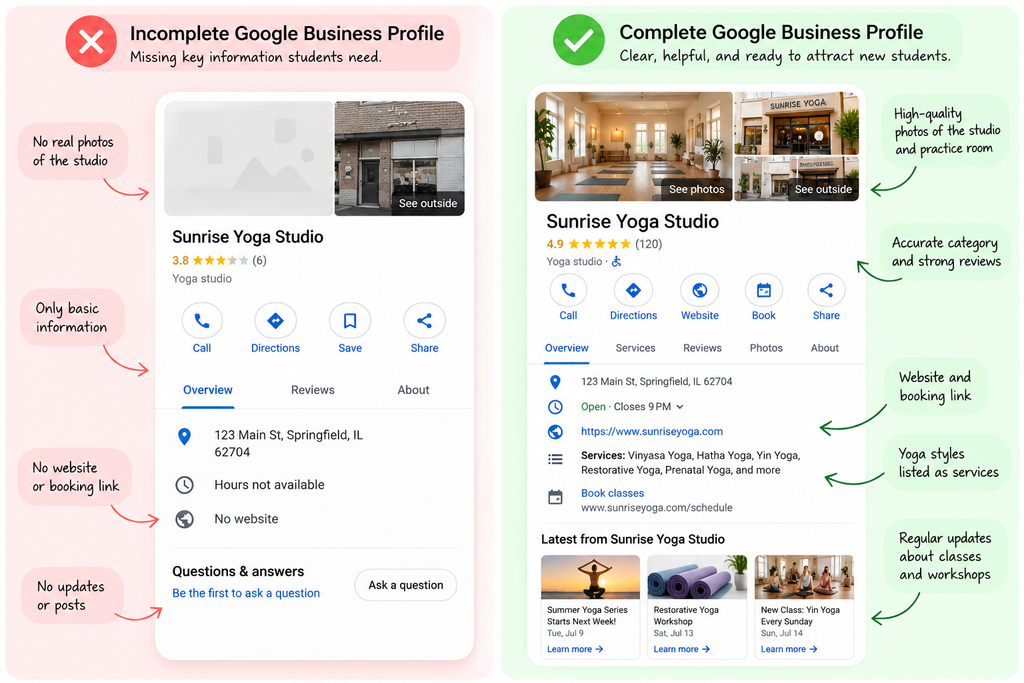
1. Complete Your Google Business Profile
A complete profile helps Google understand your business and show it in relevant searches. It also gives students the information they need to choose your studio.
Make sure you:
- Choose the most accurate primary business category.
- List your yoga styles, such as Vinyasa, Hatha, and Yin, as services.
- Add your class schedule or booking link.
- Upload clear photos of your actual studio and practice room.
- Publish updates about upcoming workshops and special classes.
Follow this Google Business Profile guide to set up and manage your listing.
Track: Calls, direction requests, and booking link clicks in Google Business Profile Performance.
2. Ask Regular Students for Google Reviews
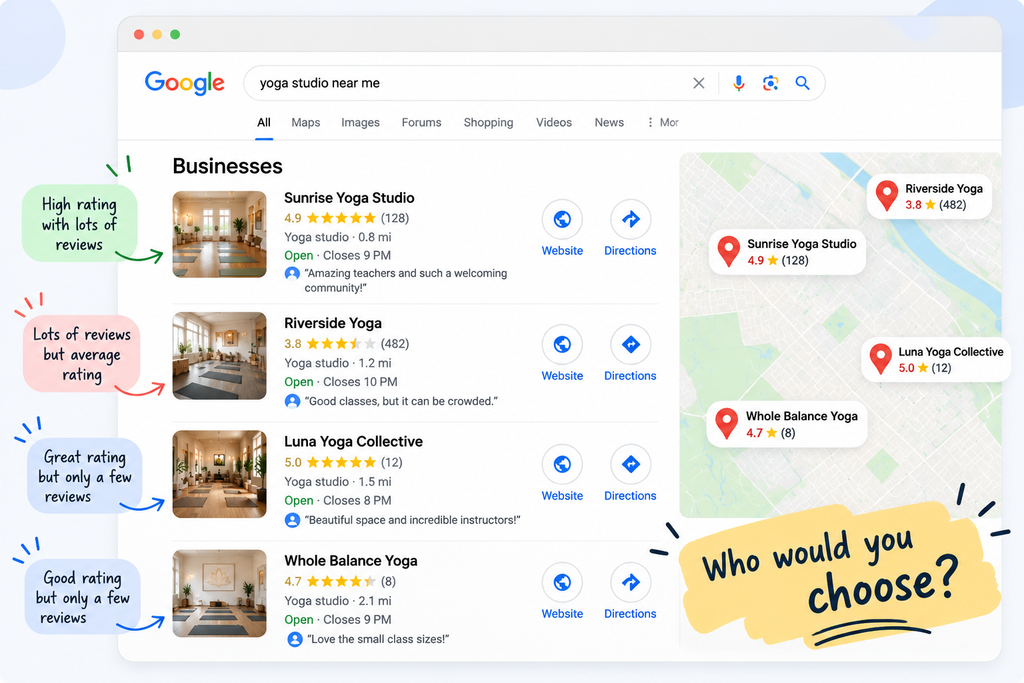
Positive Google reviews provide social proof that helps new students trust your studio and feel more comfortable booking. Google also considers review ratings and volume when ranking local businesses.
Ask regular students for an honest review after class, then text them the review link that same day. Teachers can use this simple script:
“Thanks for coming today! Would you mind leaving us a quick Google review? I’ll text you the link.”
Never offer discounts, free classes, or other rewards in exchange for reviews.
Check out these 4 Google review request templates.
Track: Number of new Google reviews each month.
3. Build a Page for Each Class Style and Level
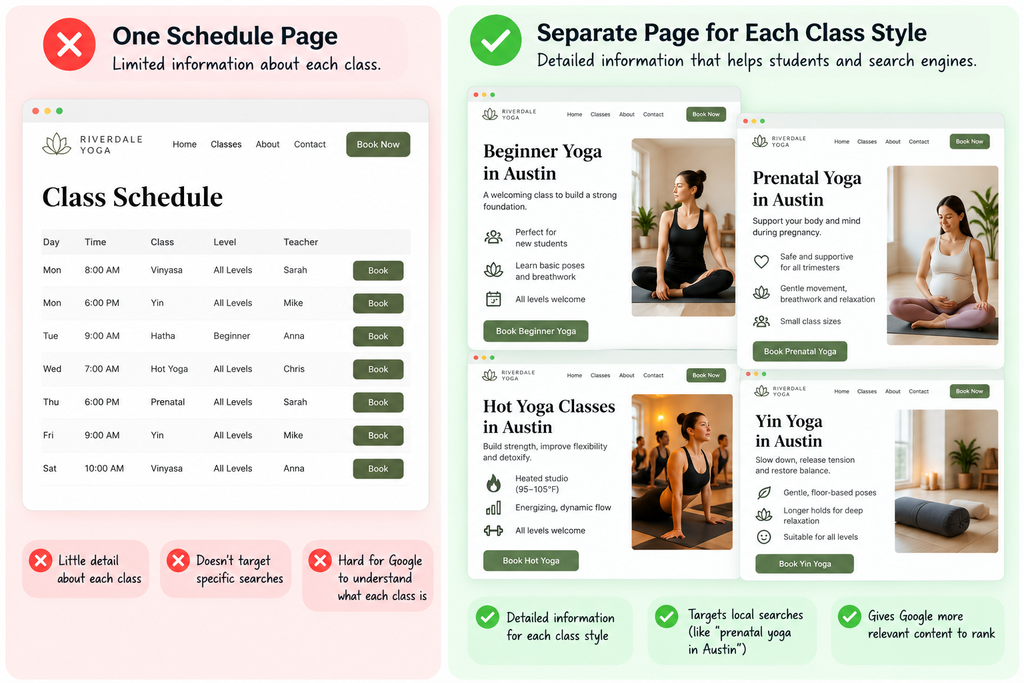
Create a separate website page for each yoga style or level you teach. Include your city in the page title to target local searches.
For example:
- Beginner yoga in [city]
- Prenatal yoga in [city]
- Hot yoga classes in [city]
- Yin yoga in [city]
Each page should explain who the class is for, what students can expect, and how to book.
A single schedule page often has little information about each class. Separate pages give Google more relevant content to match with specific searches.
Track: Organic visits to individual class pages.
4. Keep Your Listings Consistent
Students may discover your yoga studio through directories and booking platforms. Make sure your business details match across all listings.
Check these platforms:
- Yelp
- Apple Business Connect
- Bing Places
- Yoga class-booking marketplaces
Use the same business name, address, phone number, and opening hours everywhere. Update all listings whenever your contact details or hours change.
Track: Number of incorrect listings found and fixed.
5. Run Search Ads on Specific Class Searches
With Google Search Ads, you can reach people who are already looking for yoga classes nearby. Focus your yoga studio PPC campaigns on specific searches rather than broad keywords like “yoga.”
For example, target:
- “Hot yoga [city]”
- “Beginner yoga classes near me”
- “Prenatal yoga [city]”
Set a small target radius around your studio to focus your budget on nearby students. Send each ad to a page where visitors can book the class they searched for.
Track: Cost per booked first class. Divide your total ad spend by the number of first-class bookings from your ads.
Make the First Class Easy for Beginners
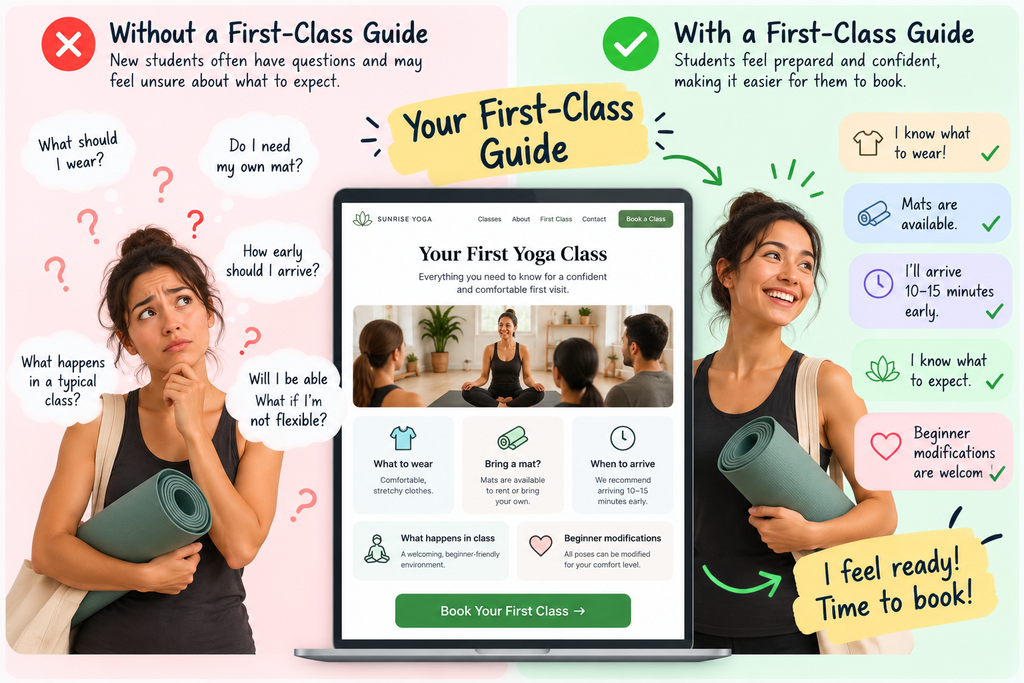
Many beginners hesitate to book because they don’t know what to expect. They may worry about keeping up, what to wear, or whether they need experience. Answer these questions before they arrive to help them feel ready for their first class.
6. Build a “Your First Class” Page
Create a first-class guide on your website that answers common beginner questions. Include:
- What to wear and bring to class.
- Whether yoga mats are available to rent.
- How early students should arrive.
- What happens during a typical class.
- Whether beginners can modify poses.
Add a link to this page in every intro-offer booking confirmation so new students can prepare before their visit.
Track: First-class bookings from the page.
7. Run a Beginner Series
A four-week beginner series gives new students a clear starting point and a chance to learn alongside others at the same level.
For example, launch a “Yoga Foundations: 4 Weeks to Get Started” program with this schedule:
- Week 1: Breathing, basic poses, and using props.
- Week 2: Balance, posture, and simple movements.
- Week 3: Connecting poses into short sequences.
- Week 4: Practicing a full beginner-friendly class.
Keep the same group together for all four weeks so students can get to know each other and their teacher.
Track: Series completion rate, the percentage of students who attend all four sessions.
8. Text First-Timers the Day Before
Send a reminder text the day before a student’s first class. Include directions, parking information, and a short message to ease any concerns.
For example:
“Hi Sarah! We’re excited to see you at Flow Yoga tomorrow at 6 PM. Parking is available behind the studio. No experience needed, just come as you are!“
Only send marketing texts with the required consent, and follow applicable opt-out rules. Check out these appointment reminder text templates for more examples.
Track: First-class no-show rate.
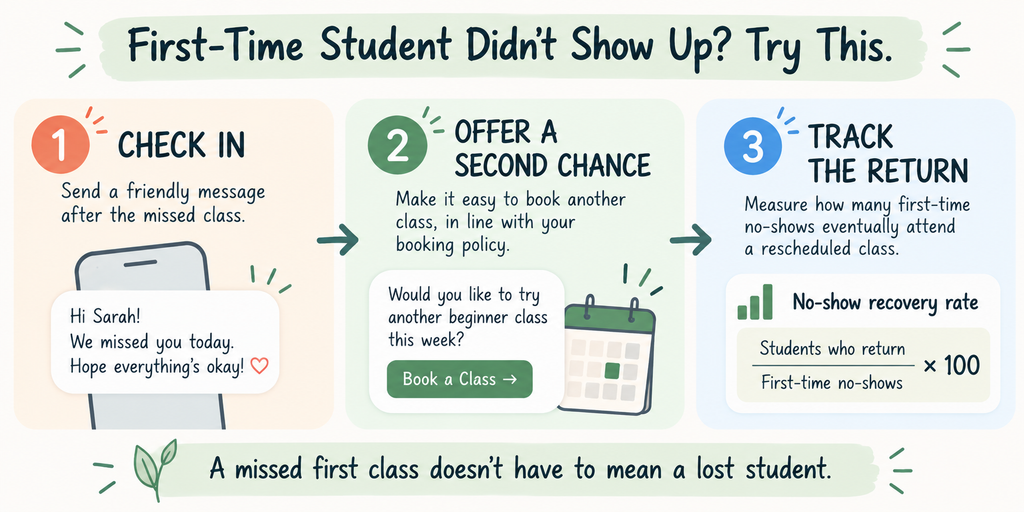
9. Greet Every First-Timer by Name
A personal welcome helps new students feel comfortable in an unfamiliar studio. Assign a teacher or front-desk staff member to greet each first-time visitor.
Have them:
- Introduce themselves and use the student’s name.
- Show them the changing area, mats, and practice space.
- Ask about their yoga experience.
- Recommend a suitable class to book next.
Before students leave, help them choose their next class based on their goals and schedule.
Track: Percentage of first-time students who return for a second class within 14 days.
Turn Intro Offers Into Memberships
An intro offer only pays off when students continue attending after it ends. Plan the entire intro period to help students build a routine and see the value of becoming members.
10. Design the Intro Offer Around the Next Step
A time-limited intro pass gives new students a chance to try different classes before committing.
Make the membership option clear from the start.
For example, offer 14 days of unlimited yoga for $39. If students sign up for a membership before their pass expires, apply that $39 toward their first month.
Include the membership offer on the booking page, confirmation email, and intro pass details.
Students should know exactly what they’ll pay and when they need to decide. Check out these 25 proven offer examples.
Track: Intro-to-member conversion rate, the percentage of intro pass buyers who become members.
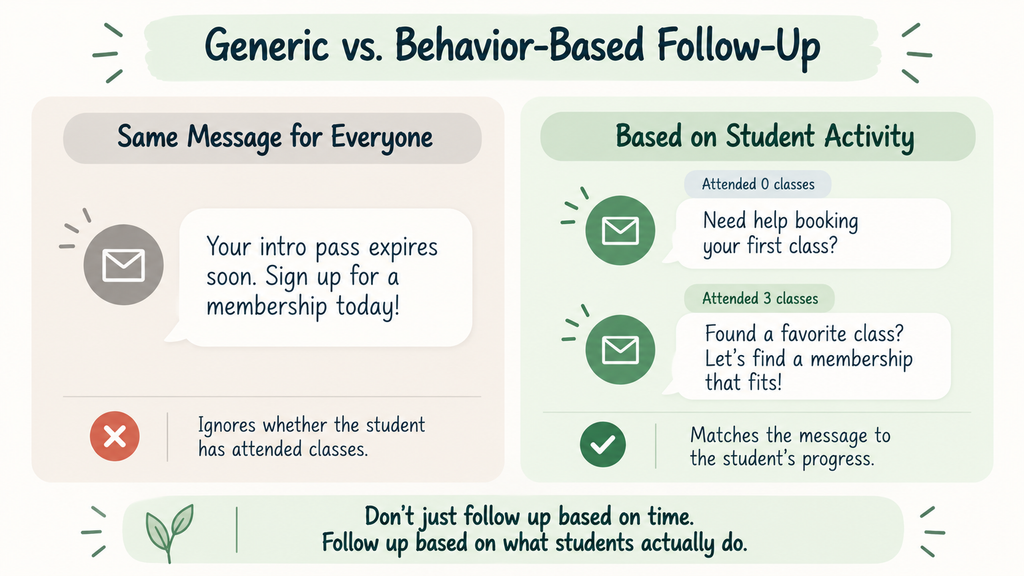
11. Follow Up During the Intro Window
Don’t wait until an intro pass expires to contact students. Send 3 messages at key points during their trial:
- After the first class: Thank them for attending and ask about their experience.
- Halfway through the pass: Suggest a specific class based on what they’ve attended.
- Before expiration: Remind them when their pass ends and explain their membership options.
For example:
“Hi Sarah! Hope you enjoyed your first Vinyasa class. Our beginner flow on Thursday at 6 PM would be a great next step. Want me to send you the booking link?“
Keep messages personal and helpful, and follow applicable SMS consent and opt-out rules. Learn more about strategies on how to convert free trials to paid members.
Track: Percentage of intro students who attend at least three classes.
12. Make the Membership Conversation in Person
The last intro class is a good time to discuss membership options. Ask students about their practice goals and recommend a plan that fits how often they want to attend.
Teachers can use this simple script:
“You’ve been coming twice a week, which is great! Are you hoping to keep that schedule? Our monthly membership would cover those classes and cost less than buying individual passes. Want me to show you the options?“
Keep the conversation short and let students decide without pressure.
Track: Intro-to-membership conversion rate by staff member.
Grow Through Referrals, Partners, and Events
Friends and local communities can help you attract new yoga students without spending heavily on ads. Referrals and partnerships let you reach people who already trust someone connected to your studio.
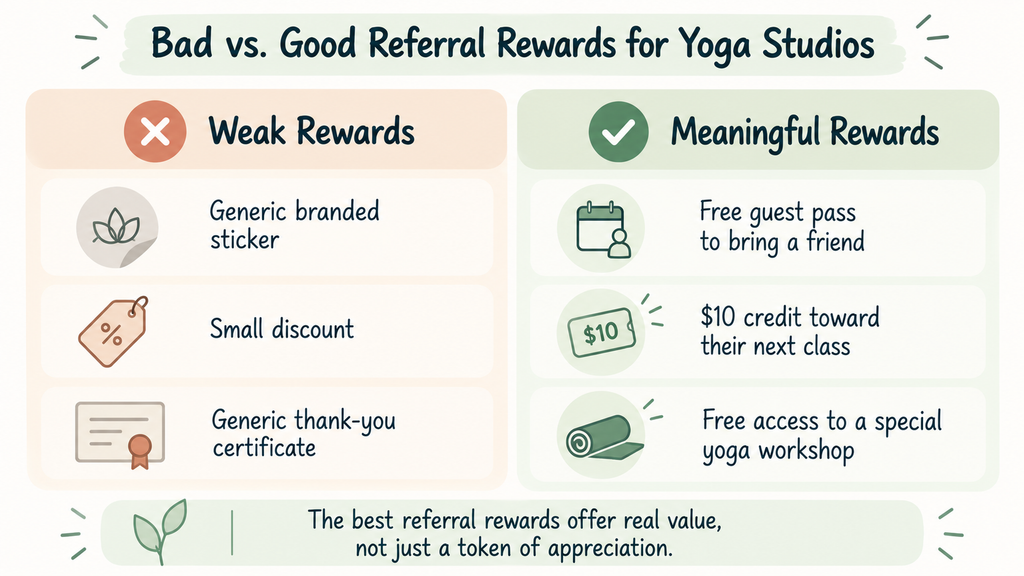
13. Launch a Two-Sided Referral Program
A two-sided referral program rewards both your current student and the friend they invite. This gives members a reason to recommend your studio and encourages their friends to try a class.
Offer rewards such as:
- A free workshop for the referring member.
- A free beginner class for their friend.
- A bonus class pack after a successful referral.
These rewards add value without lowering your regular membership prices.
Give each member a referral link or code so you can track which students bring in new visitors. Check out these 6 referral marketing tips for yoga studios.
Track: Number of referred first visits per month.
14. Host Bring-a-Friend Classes
Choose one class each month when members can bring a guest for free. Make it beginner-friendly so guests can join even if they’ve never practiced yoga.
Try a gentle flow class, partner poses, or a session focused on basic movements.
Ask members to register their guests in advance. After class, invite guests to book an intro offer so they can explore more classes. Here you can find more referral contest ideas.
Track: Percentage of guests who purchase an intro offer.
15. Partner With Non-Competing Local Businesses
Partner with nearby businesses that serve people who may be interested in yoga. These local partnerships can introduce your studio to new audiences.
Potential partners include:
- Running clubs: Offer a post-run stretching class for members.
- Physical therapists: Host a gentle mobility workshop for suitable participants.
- Climbing gyms: Organize a yoga session focused on flexibility.
- Maternity boutiques: Offer a prenatal yoga event.
- Cafes: Create a joint class and breakfast package.
Give each partner a unique discount code or booking link to measure how many new students they bring in.
Track: New students acquired through each partner code.
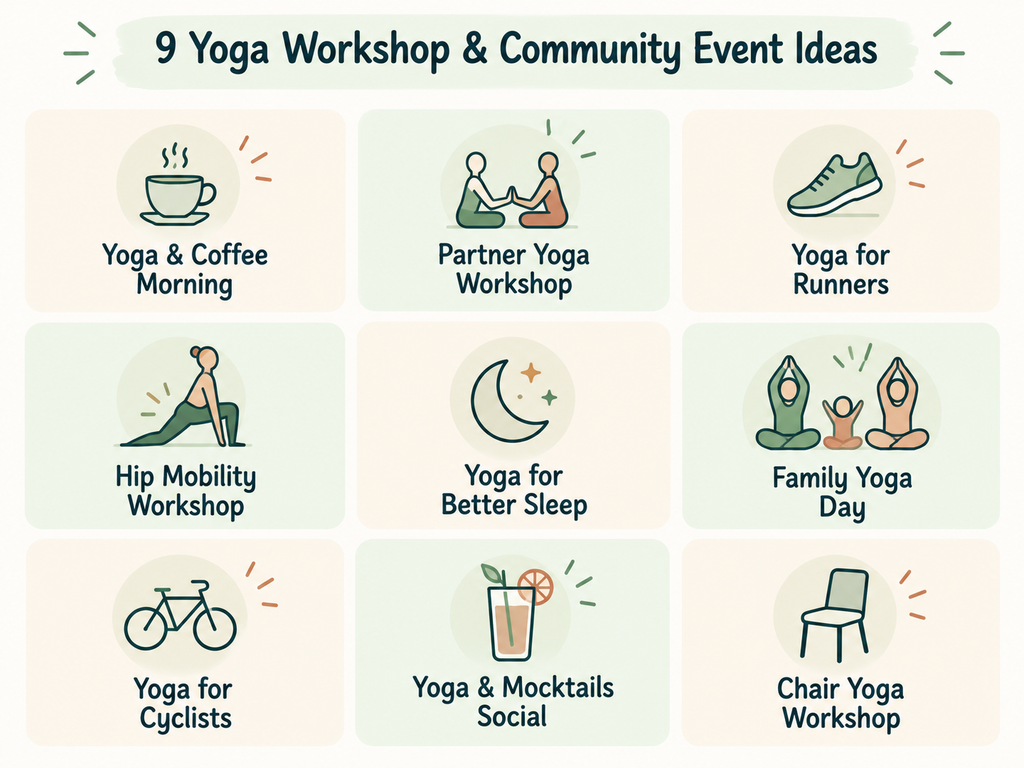
16. Run Workshops and Community Events
Workshops and community events give people a reason to visit your studio outside regular classes. Schedule them during quieter hours when possible to help fill unused space.
Try these event ideas:
- Balance Lab: A Saturday workshop on arm balances and inversions.
- Sunset Stretch Social: An outdoor evening class followed by a casual group meetup.
- Move to the Music: A gentle yoga class with live acoustic music.
- Desk Reset: A lunchtime session focused on neck, shoulder, and back mobility.
Promote each event through email, social media, and local partners. After the event, invite attendees to book a regular class.
Track: Percentage of event attendees who book a regular class within 30 days.
17. Teach On-Site Classes for Local Employers
Offer workplace yoga classes to nearby offices and businesses. These sessions help employees try yoga without having to visit your studio first.
Contact local employers and suggest a 30-minute lunchtime class or an after-work session.
Keep the class suitable for beginners and focused on common needs, such as stretching after sitting at a desk.
At the end, give employees a special first-class offer and a QR code to book at your studio.
Track: Number of employees who visit your studio after attending a workplace class.
Social Media and Content That Brings Students In
Social media works best when your content answers beginner questions and shows what students can expect at your studio. Focus on helpful posts with a clear booking link instead of only showing advanced yoga poses.
18. Post Short Videos That Answer Beginner Questions
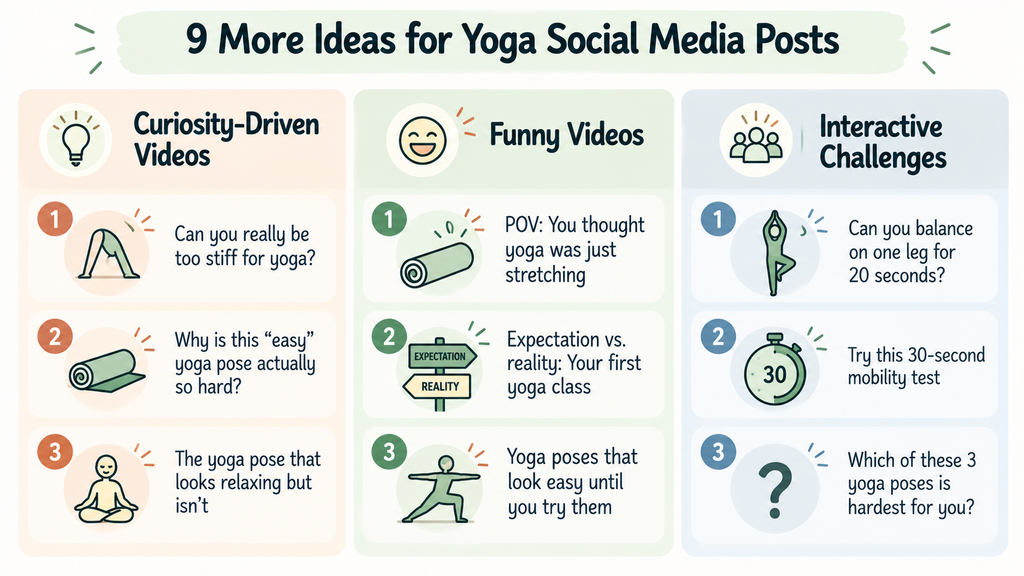
Create short videos that answer questions people have before booking their first class. Post them on Instagram Reels, TikTok, and YouTube Shorts.
Try these video ideas:
- What hot yoga feels like: Show the room and explain the temperature and class pace.
- Yoga for tight hamstrings: Demonstrate two simple pose modifications.
- 30-second studio tour: Show the entrance, changing area, and practice room.
- What to bring: Show the items students need for their first class.
Add captions so people can watch without sound. Tag your studio’s location in every post and include a booking link in your profile.
Track: Profile visits and booking-link clicks instead of likes.
19. Introduce Your Teachers
People often want to know who will teach their class before they book. Use teacher introduction videos to help students find an instructor and class style that suits them.
Ask each teacher to record a short video covering:
- Their name and the yoga styles they teach.
- What students can expect from their classes.
- Whether their classes are suitable for beginners.
- Their weekly teaching schedule.
Give each instructor a unique booking link to share with their own social media followers. This also helps independent yoga teachers promote their classes and measure bookings.
Track: First-class bookings through each teacher’s link.
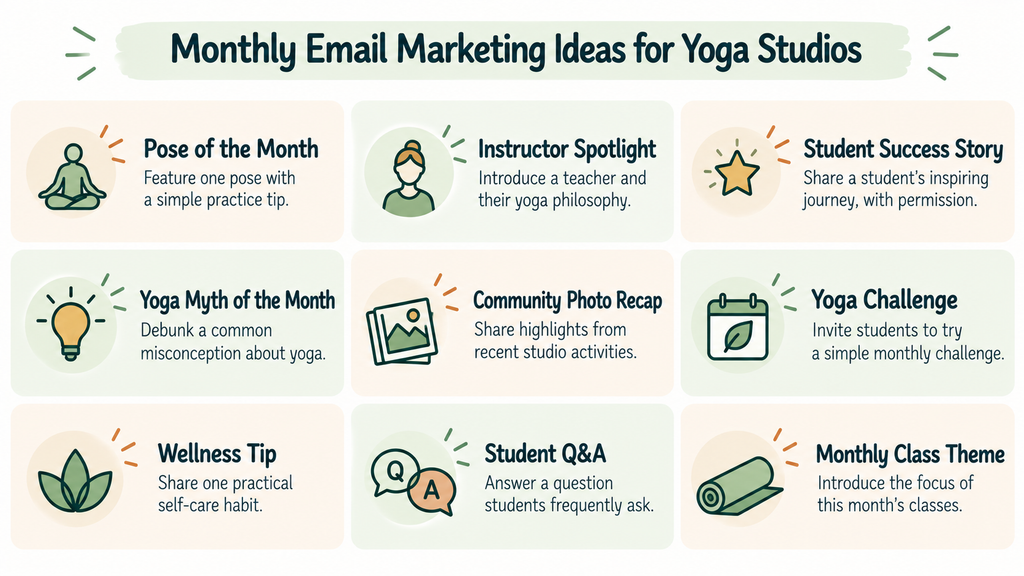
20. Send a Segmented Monthly Email
Send a monthly email with class updates, upcoming events, and booking options. Divide your email list into groups based on where students are in their relationship with your studio.
Each group should receive a different message:
- Intro students: Recommend their next class and remind them about membership options.
- Active members: Share upcoming workshops, new classes, and member events.
- Lapsed students: Invite them back with a suitable class recommendation or return offer.
Include one clear booking link in each email so students know what to do next. Here you can find 10 email marketing ideas that you can implement in your yoga studio.
Track: Class bookings from email clicks.
Keep Students Coming Back
A member who stays for a full year can bring in more revenue than several intro offers. Once your studio has a great first-month experience, focus on student retention to keep classes full and membership revenue steady.
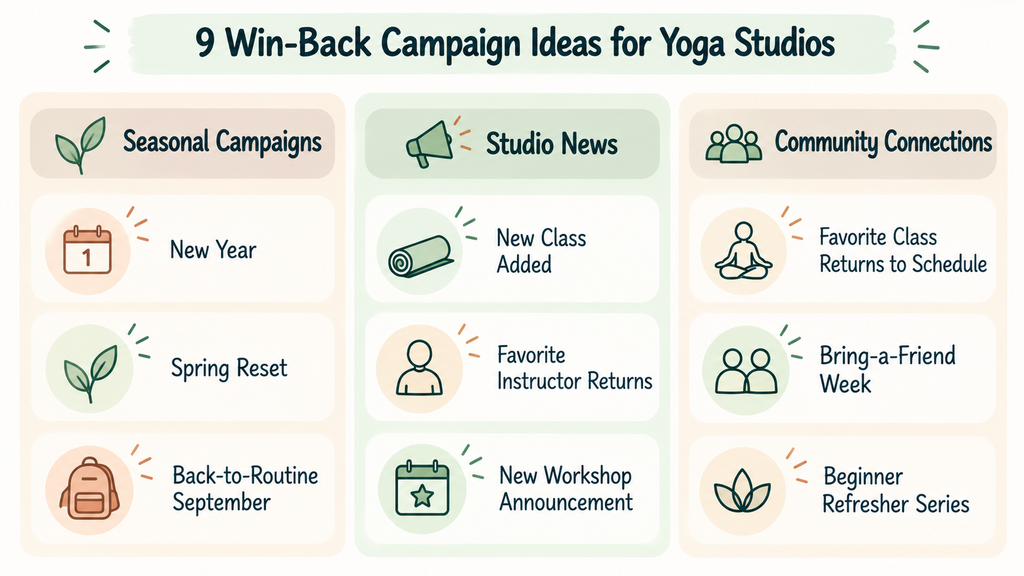
21. Win Back Lapsed Students
Identify students who have stopped attending based on their usual habits. For example, a member who normally comes every week but hasn’t visited in 30 days may need a personal reminder.
Send a friendly text inviting them to a specific class they might enjoy.
For example:
“Hi Sarah! We haven’t seen you at Flow Yoga in a while. Your favorite Yin class is running Thursday at 6 PM. We’d love to have you back! Want me to save you a spot?“
Keep the message personal and avoid pressuring students to return. For more ideas, check out this guide on how to win back past customers.
Track: Number of inactive students who return each month.
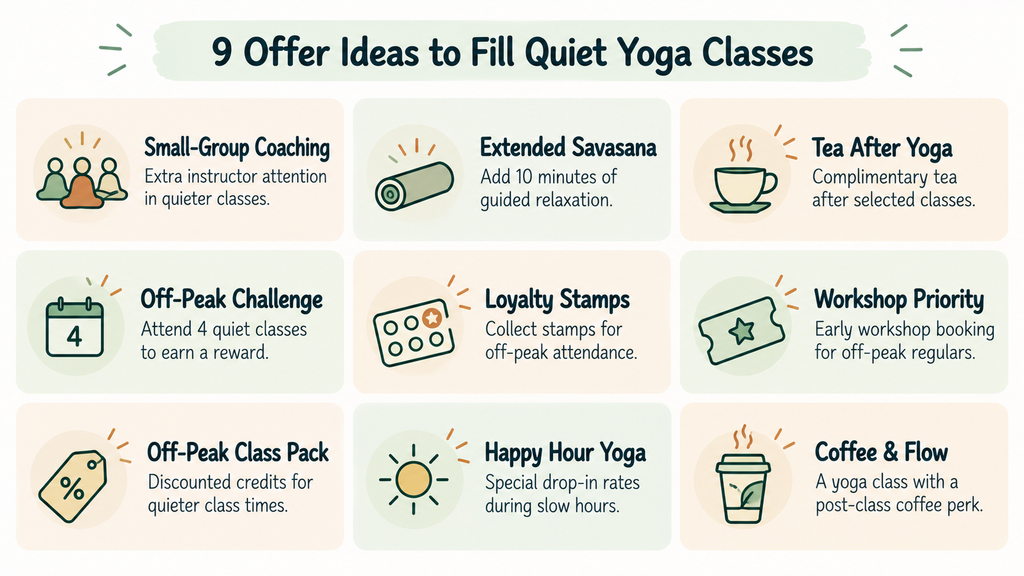
22. Fill Quiet Classes With Targeted Offers
Check your class attendance data to find days and times with the most empty spots. Then create offers that encourage students to book those sessions.
For example:
- Offer a free mat rental for Tuesday morning classes.
- Give members a guest pass valid for Friday afternoon sessions.
- Add a bonus class credit for students who attend a quiet lunchtime class.
Send these offers to students who already attend classes at similar times. For example, someone who regularly books a 10 AM class may also be available at 11 AM. The best way to promote these is with text message marketing.
Track: Average attendance in the classes you’re trying to fill.
23. Offer Livestream or On-Demand Classes for Travel Weeks
Give members access to online yoga classes when they’re traveling or unable to visit the studio.
Offer livestream sessions or a small library of recorded classes so they can keep practicing away from home.
Include online access in selected memberships to give students more flexibility during busy holiday periods.
Track: Membership cancellations during holiday months.
24. Reward Practice Milestones and Market Retreats to Members First
Celebrate students who reach their 50th or 100th class with a personal message, small gift, or free workshop pass. These rewards recognize their commitment and encourage them to keep attending.
Give your most active members early access to yoga retreats, teacher training programs, and special workshops before promoting them to the public. For yoga retreat marketing, start with members who regularly attend classes or have shown interest in longer programs.
Track: Average class visits per member each month.
How to Measure Your Yoga Studio Marketing
Each stage of the student journey has a key metric that helps you see what’s working and where you need to improve.
| Goal | Metric | Where to Find It |
| Get found locally | Calls, direction requests, booking clicks | Google Business Profile Performance |
| First visits | First-time bookings by source | Booking software intake questions or referral codes |
| First month | Intro-to-member conversion rate | Membership and sales reports |
| Retention | Visits per member per month, 90-day retention rate | Attendance reports |
| Community | First visits from referrals and partner codes | Referral and partner codes |
| Paid ads | Cost per booked first class | Google Ads or Meta Ads Manager, plus booking source data |
FAQ
Is a Yoga Studio a Profitable Business?
Yes, a yoga studio can be profitable. Studios with steady membership income can better predict monthly revenue and cover fixed costs. A higher intro-to-member conversion rate can also improve profits by increasing revenue from each new student.
What Are the Newest Yoga Trends?
According to the American College of Sports Medicine’s 2026 fitness trends report, balance and mobility training, exercise for mental health, and fitness programs for older adults are growing areas of interest. Yoga studios can test these trends through short workshops or limited class series before changing their regular schedules.
Is Yoga Less Popular Now?
No, long-term U.S. survey data show that yoga participation has grown. According to the National Institutes of Health, the share of U.S. adults practicing yoga rose from 5% in 2002 to 15.8% in 2022. This suggests continued demand for yoga, although individual studios still need to compete for local students.
Final Thoughts: Yoga Studio Marketing
The best yoga studio marketing strategy starts with fixing the areas where you’re losing students. Use the start-here table to choose ideas that match your biggest challenge, then track results to see what improves bookings and retention.
Ready to grow your studio? Explore Referrizer to manage referral and loyalty programs, online reputation, text messages, and email marketing, all in one platform.